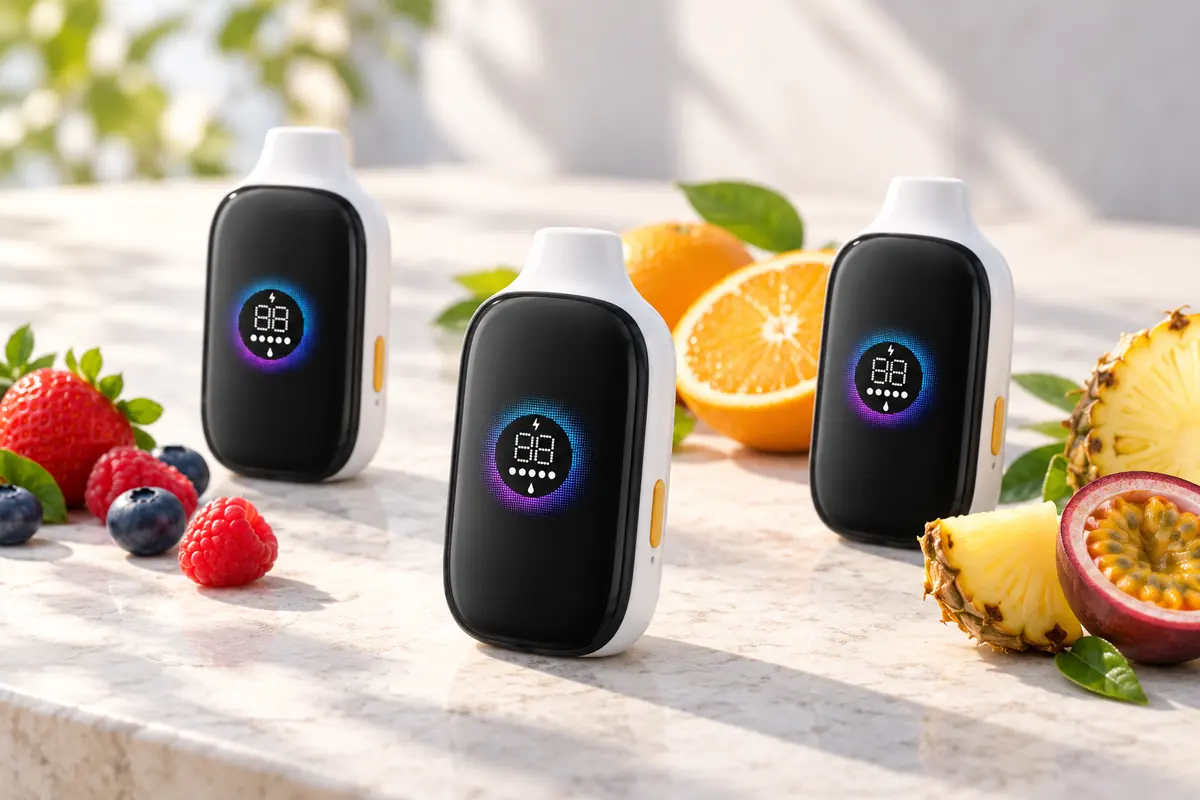
TOMORO MAX 15000 flavours are easier to compare once you separate the device from the names on the selector. Its broad, curved black face, white shell and circular colour display give you a clear visual reference. Then you reach a menu that moves from a single fruit to three-fruit blends, from explicit ice to candy. Several names share an ingredient, yet lead to quite different expectations.
This is a guide to that choice, based on the twelve flavours currently shown on our TOMORO MAX 15000 product page. It is written for someone choosing between actual product labels, rather than promising how any flavour will taste to every person. Read the complete name, compare the product image and use the live selector to confirm availability before ordering.

The device matters before the fruit does. TOMORO describes a 10 W and a 16 W power setting for MAX, with different upper puff estimates for each mode. That is why the “15000” in the name should be read as an upper estimate under one setting, not as an identical result for everyone. The manufacturer's MAX page is the useful reference for those specifications. If you are comparing a familiar flavour name across brands, check the body and full model name as carefully as the flavour: a Blueberry Ice in this range is still a TOMORO MAX, not an IGET One or a SP2S.
Start by deciding what “ice” should do
You can eliminate a surprising amount of indecision with one question: do you actually want a cooling finish? Three of the twelve TOMORO MAX 15000 flavours say “Ice” plainly: Blueberry Ice, Blackberry Ice and Strawberry Ice. Their names make a direct promise about the flavour direction, but they do not tell you that all three will feel equally cool or sweet. The fruit at the front changes the impression.
Blueberry Ice is the softest sounding starting point for someone who usually chooses a rounded berry. Blackberry Ice suggests a darker, sharper berry edge. Strawberry Ice is brighter and more familiar, but its short name is easy to confuse with the two longer strawberry combinations elsewhere in the range. If cooling is the reason you arrived at this group, keep the comparison between these three first. Do not add a flavour merely because its product photograph happens to use blue or purple lighting; the actual label should drive the decision.
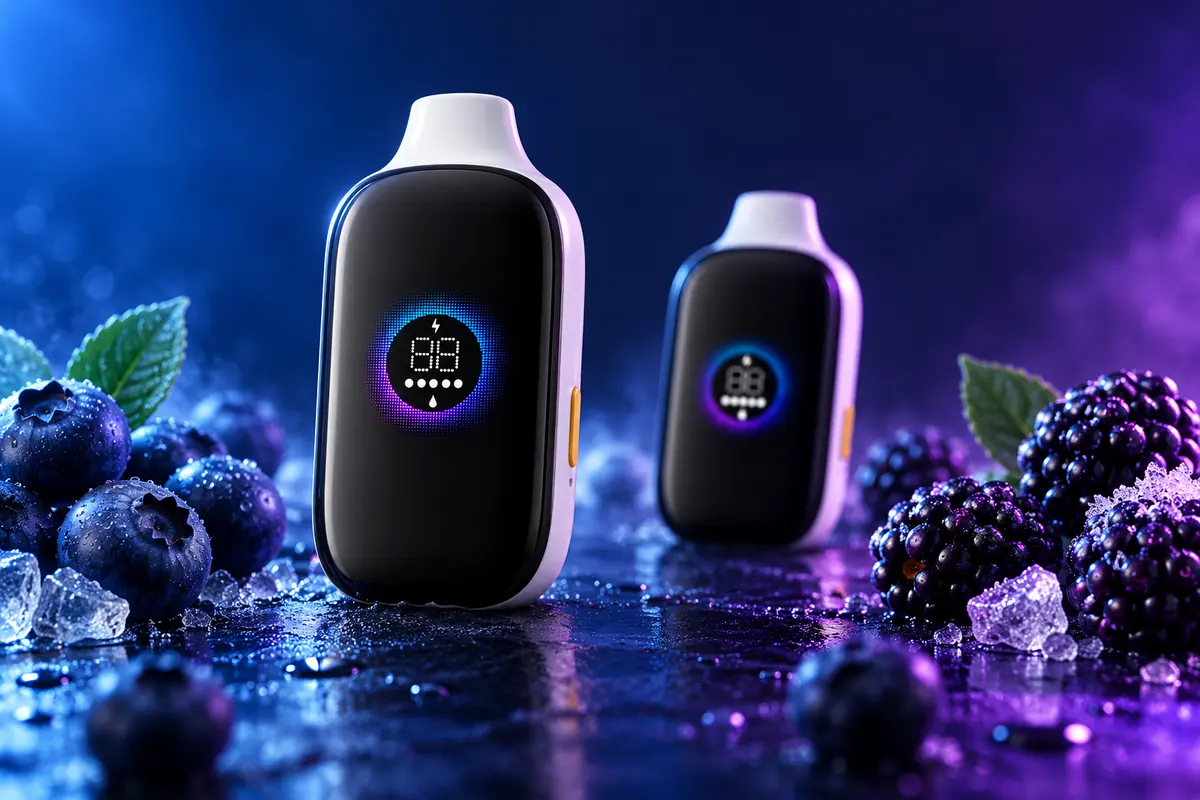
There is also a useful boundary here. Blackberry Cherry Pomegranate begins with Blackberry, but the rest of its name points toward a layered dark-fruit blend rather than an explicitly icy finish. A person looking for Blackberry Ice can easily land on the wrong option by reading only the first word. On the TOMORO MAX 15000 selector, pause long enough to read the full button and watch the selected product image change.
The three strawberry paths are further apart than they look
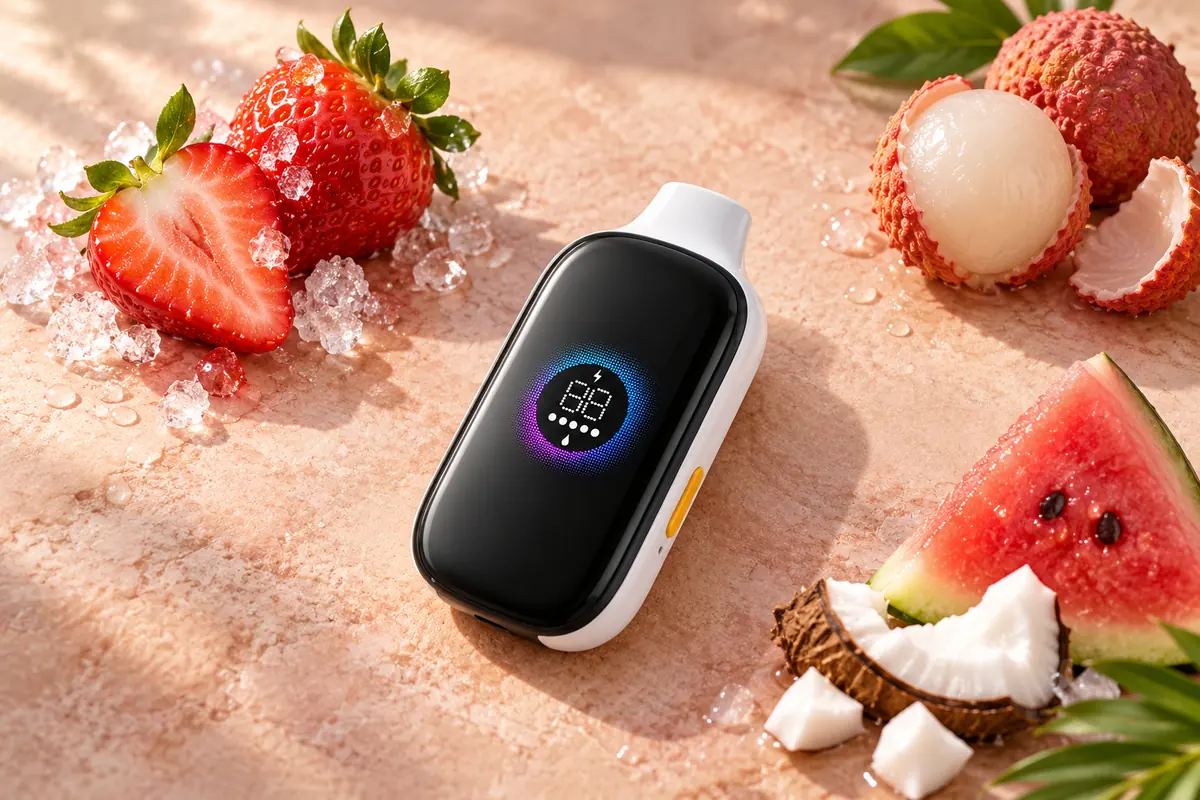
Strawberry is the range's clearest example of why a list of names is less useful than a comparison. Strawberry Ice is a short, fruit-plus-cooling proposition. Strawberry Lychee moves the idea toward a floral fruit pairing. Strawberry Coconut Watermelon is longer and rounder, bringing a creamy-sounding ingredient and melon into the picture. The latter is not simply a stronger version of Strawberry Ice. It is a different direction entirely.
Imagine that you have narrowed your choice to two of these. If the important thing is a cool finish and a straightforward strawberry name, Strawberry Ice remains the cleanest fit. If you want strawberry to share the stage with another fragrant fruit, read Strawberry Lychee next. If you like the idea of a layered summer blend rather than a crisp single note, Strawberry Coconut Watermelon earns its place on the shortlist. Those are interpretations of the named ingredients, not claims that each palate will perceive the same balance.
The comparison also keeps your basket varied. Choosing all three because you “like strawberry” may be less useful than choosing one strawberry option and one that tests a genuinely different direction. Our broader vape flavours by brand and device guide is a good next step if you are still deciding whether MAX is even the right series for you.
Read the tropical names from right to left
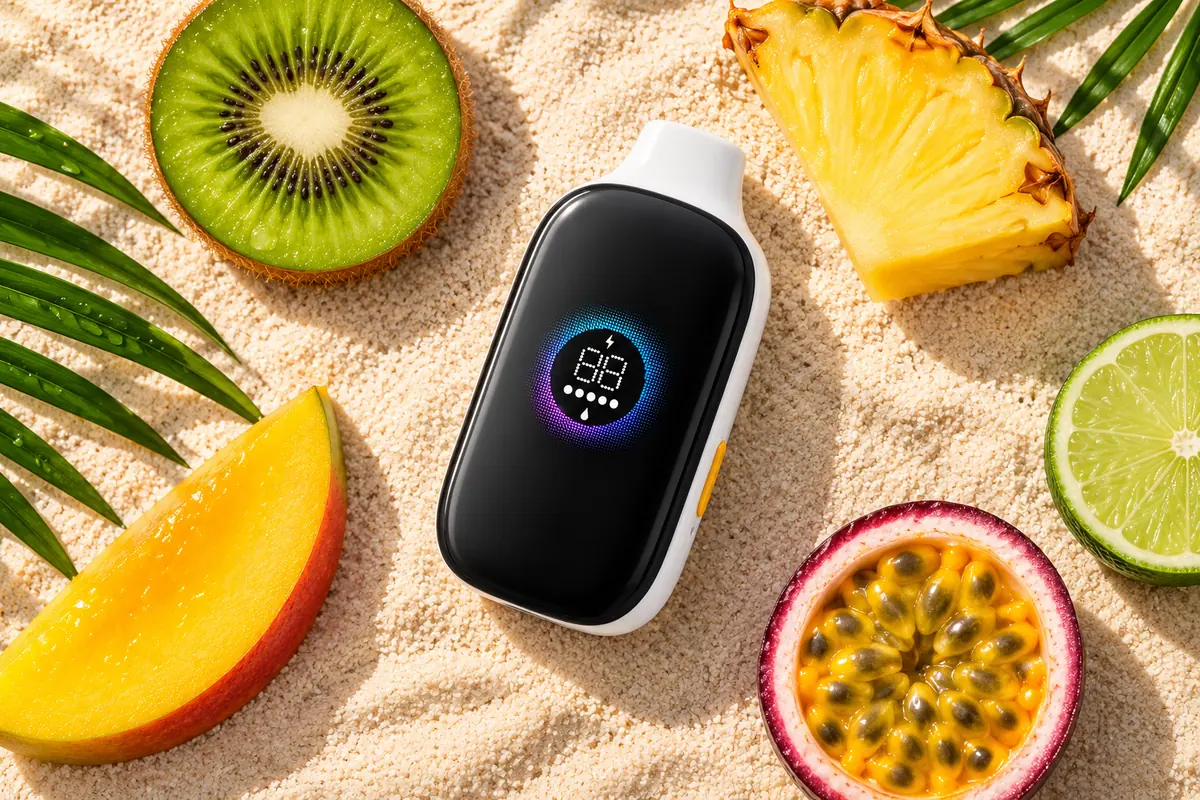
The tropical end of this menu can be misleading if you stop at its first fruit. Mango Boom is the direct mango-led name. Kiwi Pineapple pairs a green-fruit cue with pineapple. Passion Fruit Mango Lime is the one to examine when you want a sharper ending: the lime in the full name is as important to the idea as the mango in the middle. These three sit near one another in a mental shortlist, but they are not interchangeable.
Try reading each option backwards. Lime tells you that Passion Fruit Mango Lime is the citrus-leaning tropical choice. Pineapple tells you Kiwi Pineapple is a two-fruit pairing with a different kind of brightness. Boom tells you very little beyond the strength of the mango idea, so the matching product page and image matter more there. The method is simple, but it prevents a common selection mistake: seeing “mango” twice and treating two separate buttons as near duplicates.
Watermelon Smash deserves its own thought before being swept into this group. It is the most direct melon-led label in the range, whereas Strawberry Coconut Watermelon uses watermelon as one part of a longer blend. If you want a clear watermelon idea, start with Smash. If you want watermelon to soften a strawberry-and-coconut combination, return to the longer name. An image can help you recognise the selected product; it cannot substitute for reading those ingredient words.
The names that change the mood of the shortlist
When every candidate on your list is fruit-plus-ice or sunny tropical fruit, look at the three deliberate outliers. Grape Lemon places a darker fruit against citrus. Blackberry Cherry Pomegranate is the densest sounding red-and-dark-fruit combination on the page. Skittles is a candy-style name rather than a literal fruit pair. None is a generic “mixed fruit” catch-all; each offers a different reason to leave the safer choices behind.
Grape Lemon is worth considering if you want contrast within a short name. Blackberry Cherry Pomegranate makes sense if the appeal is complexity and you are comfortable with three ingredients on one label. Skittles is the clear departure when a confectionery profile sounds more appealing than trying to identify a leading fruit. These readings come from the names and product range, not from a laboratory measurement of sweetness or cooling. If that distinction matters to you, choose a less ambiguous label first.
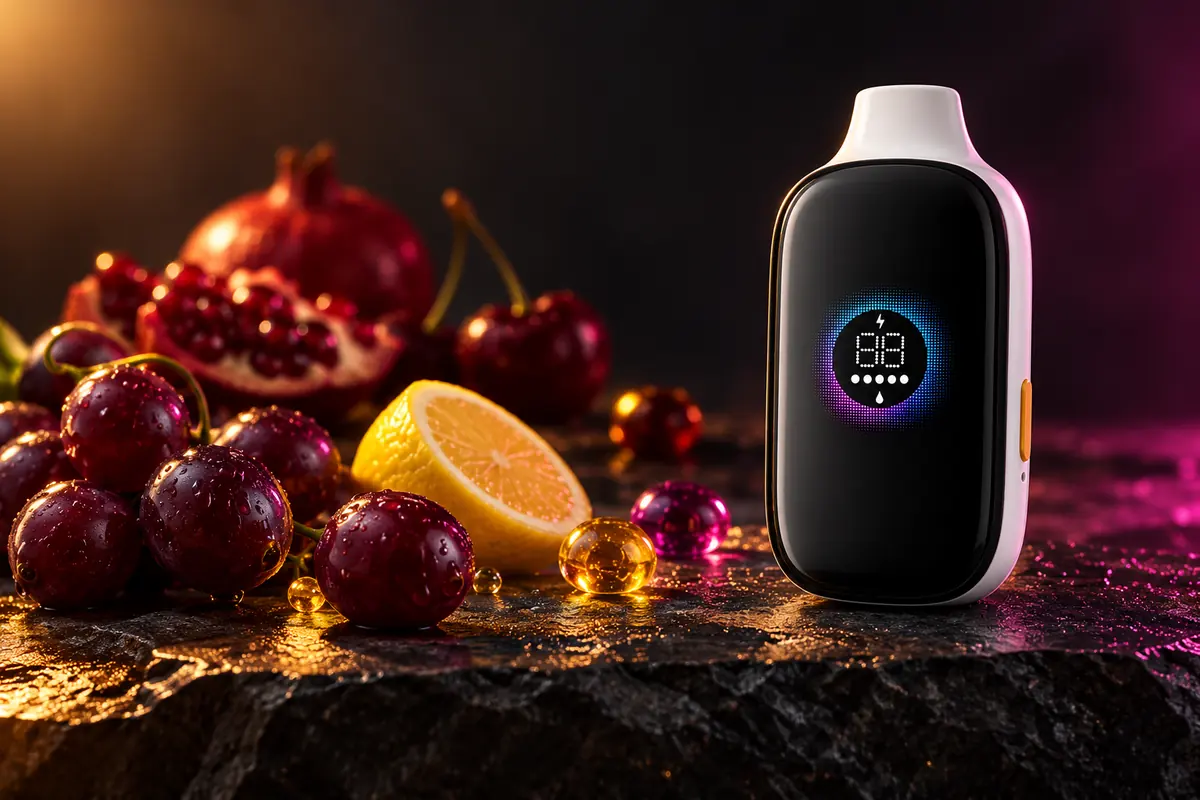
The shortlist now has a few useful crossing lines: “Ice” appears in three names, strawberry also appears in three, and tropical fruit runs through several more. These are overlapping ways to compare twelve products, not separate bins. Watermelon Smash sits between the strawberry blends and the tropical choices as a clean melon alternative. The individual product buttons on the live page remain the final source for what can be selected.
A two-flavour test is often better than a six-flavour guess
If you are undecided, choose two flavours that answer different questions. Blueberry Ice beside Blackberry Cherry Pomegranate tests simple cooling against layered dark fruit. Strawberry Ice beside Strawberry Lychee tests a cool finish against a floral pairing. Mango Boom beside Passion Fruit Mango Lime tests a direct tropical name against one with a citrus edge. Watermelon Smash beside Strawberry Coconut Watermelon tests melon on its own against melon inside a longer blend.
That approach is more informative than filling a basket with flavours that differ only in their first word. It also gives you a reason to revisit the range after you know which direction you prefer. The TOMORO MAX product page lets you select named flavours and quantities; check the displayed image and order summary before adding your choices. For another model-led comparison, the IGET One flavours list shows how a different device family organises its options. The SP2S 12000 flavours guide is another useful contrast if you want to compare range size and naming style before settling on TOMORO.
Three questions that come up at the selector
Are there twelve TOMORO MAX 15000 flavours on this site? The parent product page currently shows twelve named options. Stock and selection controls can change, so use that live page to verify the option you want when you order.
Does “Ice” appear in every cooling-sounding flavour? No. Only Blueberry Ice, Blackberry Ice and Strawberry Ice use the word explicitly in the current list. Do not infer a cooling level for another flavour from its fruit photograph or background colour.
Does 15000 mean every device delivers exactly that number of puffs? No. TOMORO publishes upper estimates that differ by power mode, and personal use varies. Check the manufacturer's specification and the selected mode rather than treating the name as a guarantee.
The best final check is visual and verbal at once: confirm the product listing says TOMORO MAX 15000, read the entire flavour name, and match it to the active picture. If you want to understand vaping's health effects before making a purchase, Healthdirect's Australian vaping overview is a public health reference. Then return to the live product selector with a shorter, more deliberate shortlist.
Leave a Reply